
Transforming STPs into Sustainable Solutions: GreenSew’s Approach to Wastewater Management
Introduction
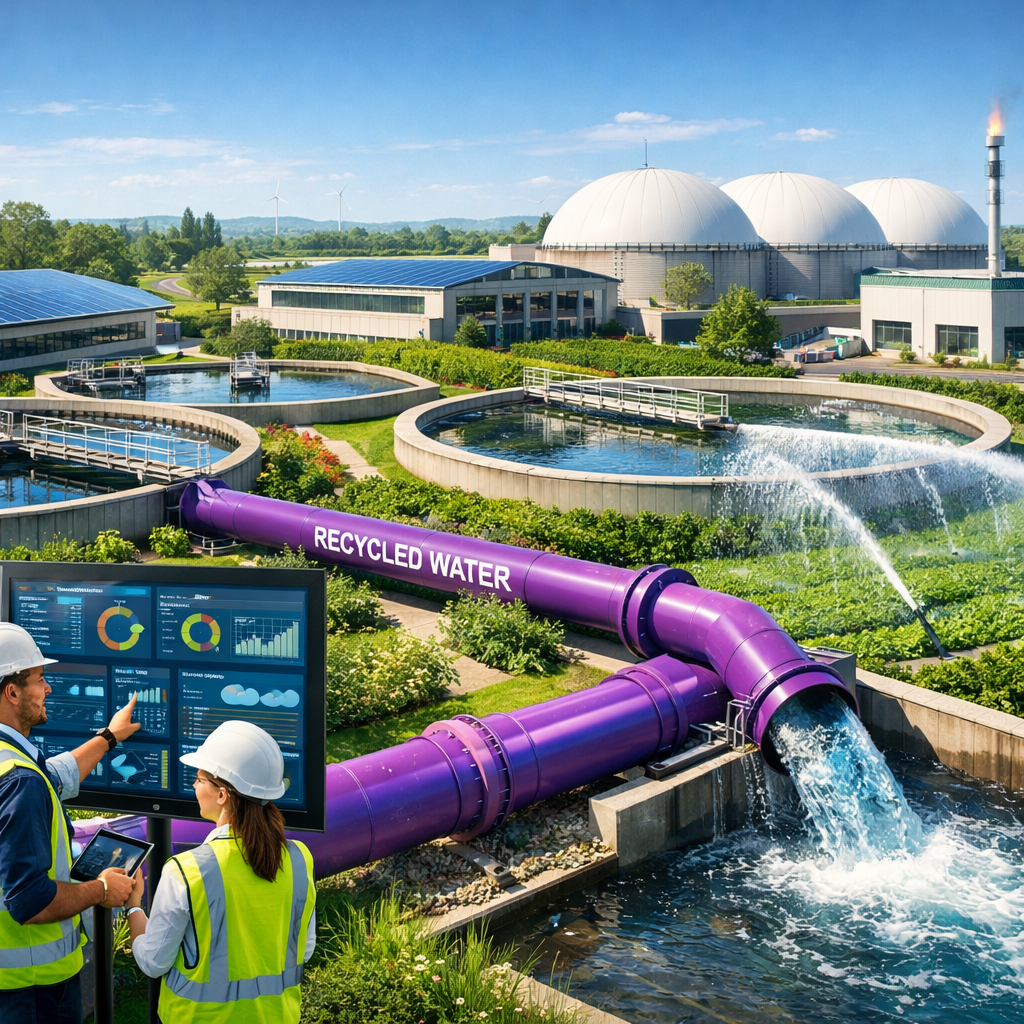
Sewage treatment plants (STPs) are often seen as cost centers—essential but invisible. I prefer to think of them as underused engines for circular value. With the right design, operations, and partnerships, STPs can turn liabilities into reliable water, energy, and nutrient streams. This is the lens I bring at GreenSew: practical sustainability that pays for itself.
The Problem We’re Solving
- Rising water stress: Cities face tightening freshwater allocations while industrial demand grows.
- High O&M costs: Energy-intensive treatment strains municipal budgets and factory margins.
- Waste externalities: Sludge, greenhouse gas emissions, odors, and community resistance create hidden costs.
GreenSew’s Philosophy
- Source-segregate and right-size: Design for actual influent variability, not optimistic averages.
- Recover first, dispose last: Prioritize water reuse, biogas capture, and nutrient recovery before considering discharge.
- Data over guesswork: Use sensors, soft meters, and digital twins to tune processes in real time.
- Community-positive by design: Quiet, odor-controlled, landscape-integrated plants earn social license.
Our Approach
1) Water Reuse as a Product
- Target <10 mg/L BOD, <5 NTU turbidity, and log reduction requirements based on end-use.
- DeployMBR + UV/AOP orMBBR + Tertiary Filtration stacks depending on loading and footprint.
- Offer direct reuse for cooling towers, process water, and irrigation via dedicated purple networks.
2) Energy Neutrality (or Better)
- Install high-efficiency blowers and VFDs; adoptintermittent aeration strategies guided by online ammonia/DO control.
- Capture biogas from anaerobic digestion; clean for CHP or microturbines.
- Integrate rooftop solar; size battery storage to cover peak aeration loads.
3) Sludge to Resource
- Apply thermal hydrolysis or enzymatic pretreatment to boost volatile solids destruction.
- ProduceClass A biosolids for co-composting; recover struvite to protect pipes and sell as slow-release fertilizer.
- Where appropriate, deploy black soldier fly larvae to valorize screened organics.
4) Digital Operations
- Build a digital twin calibrated to site-specific kinetics (ASM1/ASM2d).
- Use soft sensors for ML-predicted TKN, TP, and SVI; automate setpoints to minimize kWh/m³ and chemical dosing.
- Dashboard KPIs: kWh/m³, \\$ per m³, specific sludge yield, methane recovery rate, and compliance risk index.
5) Compliance by Design
- Map discharge permits to unit operations; include redundancy for the tightest limits.
- Design forISO 46001 water efficiency management andISO 14001 EMS alignment from day one.
- Build in sampling ports and composite samplers to simplify audits and reporting.
Case Snapshots
- Industrial estate retrofit (15 MLD): Converted conventional ASP to MBR; achieved 45% OPEX reduction and 70% onsite reuse, with CHP from digester gas covering 55% of power needs.
- Municipal STP (60 MLD): Introduced A2/O + tertiary cloth filtration; phosphorus recovery ~1.2 tons/month as struvite; odor footprint cut by 80% through covers and biofilters.
- Textile cluster (10 MLD): Integrated equalization, high-rate DAF, and MBBR polishing; dye color removal >95% and permeate reused in dyeing lines after RO.
Partnership Models
- Design–Build–Operate (DBO): Performance guarantees on reuse quality, uptime, and kWh/m³.
- Water-as-a-Service: Zero capex option with metered pricing per m³ treated and reused.
- ESG-linked finance: Tie tariffs to verified GHG reductions and water-offset credits.
Measuring Impact
- Water offset (m³/year), grid kWh avoided, methane captured (Nm³/year), biosolids diverted (tons/year).
- Social metrics: complaints reduced, green space added, and local jobs created.
- Financial: payback period, internal rate of return, and avoided discharge penalties.
Getting Started
- Audit influent/effluent with a 2–4 week monitoring campaign.
- Run a pilot skid to validate kinetics and fouling behavior.
- Build the business case: capex/opex, savings from reuse, and ESG outcomes.
Conclusion
STPs can be more than compliance boxes—they can be platforms for water security, energy recovery, and community value. At GreenSew, we design for circularity, operate with data, and partner for outcomes. If you’re ready to turn wastewater into an asset, let’s co-create a solution that fits your goals and constraints.