
Advanced Ultra Filtration Recycling STP: Complete Guide to Water Reuse, Process, Benefits, Applications & Cost (2026)
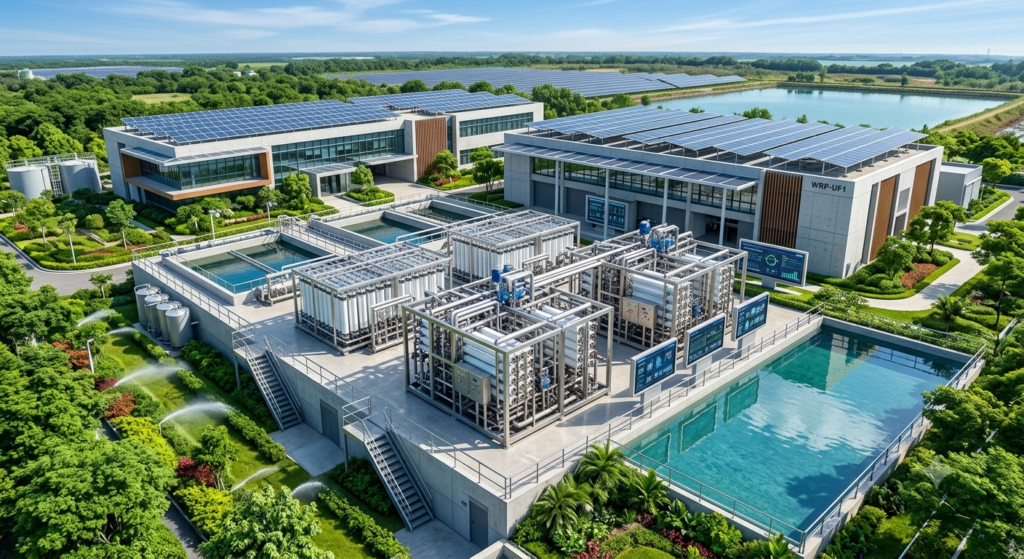
With increasing water scarcity, stricter environmental regulations, and rising freshwater costs, industries, commercial buildings, residential apartments, hospitals, hotels, educational institutions, and municipalities are actively looking for sustainable water management solutions. One of the most effective technologies available today is theAdvanced Ultra Filtration Recycling STP (Sewage Treatment Plant).
An Advanced Ultra Filtration (UF) Recycling STP combines conventional biological sewage treatment with advanced membrane filtration technology to produce high-quality recycled water suitable for various non-potable applications. Unlike traditional sewage treatment systems, UF technology removes suspended solids, bacteria, viruses, and microscopic contaminants, resulting in crystal-clear treated water that can be safely reused for flushing, landscaping, cooling towers, industrial processes, and irrigation.
As governments encourage wastewater recycling and zero-liquid-discharge initiatives, installing anAdvanced Ultra Filtration Recycling STP has become a smart investment for organizations seeking to reduce freshwater consumption, lower operating costs, and meet environmental compliance standards.
In this comprehensive guide, you’ll learn everything about Advanced Ultra Filtration Recycling STPs, including their working process, components, advantages, applications, and why they are becoming the preferred wastewater recycling solution across India.
What is an Advanced Ultra Filtration Recycling STP?
AnAdvanced Ultra Filtration Recycling STP is an upgraded sewage treatment system that incorporatesUltra Filtration (UF) membrane technology as a tertiary treatment stage after biological treatment.
The primary objective of the system is not only to treat sewage but also to recycle wastewater into reusable water with excellent clarity and significantly reduced microbial contamination.
Unlike conventional STPs that typically discharge treated water after secondary treatment, UF recycling systems further purify the water using semi-permeable membranes with pore sizes ranging from0.01 to 0.1 microns.
These membranes effectively remove:
- Suspended solids
- Fine particles
- Turbidity
- Bacteria
- Viruses
- Colloidal particles
- Algae
- Pathogens
The resulting recycled water can be safely reused for several non-potable applications, helping organizations conserve freshwater resources while reducing operating expenses.
Why Water Recycling is Becoming Essential in 2026
Water scarcity is becoming one of the biggest environmental challenges globally. India, in particular, faces increasing groundwater depletion, irregular rainfall, urbanization, and rising industrial water demand.
Traditional dependence on freshwater sources is no longer sustainable.
This is why organizations are investing inAdvanced Water Recycling Systems that maximize every drop of wastewater generated.
Major Reasons Behind Water Recycling
1. Increasing Freshwater Costs
The cost of purchasing municipal water or tanker water continues to rise every year. Recycling treated wastewater significantly reduces dependence on external water sources.
2. Government Environmental Regulations
Pollution Control Boards increasingly encourage wastewater treatment and reuse instead of direct discharge.
Installing a recycling STP helps organizations remain environmentally compliant.
3. Sustainable Water Management
Water recycling supports green building initiatives, ESG goals, and sustainable development by minimizing freshwater consumption.
4. Reduced Environmental Pollution
Instead of discharging treated sewage into nearby water bodies, recycled water is reused internally, reducing environmental impact.
5. Improved Water Security
Organizations become less dependent on unpredictable municipal supplies during droughts or summer shortages.
Main Components of an Advanced Ultra Filtration Recycling STP
An Advanced Ultra Filtration Recycling STP consists of multiple treatment stages working together to deliver consistently high-quality recycled water.
1. Collection Tank
The process begins with collecting sewage from residential, commercial, or industrial sources.
The collection tank temporarily stores incoming wastewater before treatment.
Functions
- Equalizes incoming flow
- Prevents overflow
- Reduces shock loading
2. Screening System
The screening chamber removes larger materials such as:
- Plastic
- Cloth
- Paper
- Leaves
- Solid debris
Removing these materials protects downstream equipment from damage.
3. Equalization Tank
Wastewater characteristics continuously change throughout the day.
The Equalization Tank balances:
- Flow rate
- Organic load
- pH variations
This ensures stable biological treatment.
4. Biological Treatment Tank
This is the heart of the sewage treatment process.
Beneficial microorganisms consume organic pollutants present in sewage.
Common biological technologies include:
- MBBR
- SBR
- Activated Sludge Process
- Johkasou Technology
- IFAS
These bacteria convert dissolved organic matter into harmless compounds.
5. Secondary Clarifier
After biological treatment, biomass settles at the bottom.
The clarifier separates:
- Activated sludge
- Treated water
Settled sludge is either recycled or sent for sludge handling.
6. Pressure Sand Filter (PSF)
The Pressure Sand Filter removes:
- Fine suspended solids
- Turbidity
- Residual particles
This acts as pre-treatment before Ultra Filtration.
7. Activated Carbon Filter (ACF)
The Activated Carbon Filter improves water quality by removing:
- Odor
- Color
- Organic compounds
- Residual chlorine
This stage enhances the efficiency of UF membranes.
8. Ultra Filtration (UF) Membrane System
This is the most advanced stage of the treatment process.
UF membranes act like microscopic filters capable of removing contaminants invisible to the naked eye.
UF Membranes Remove
- Bacteria
- Viruses
- Colloids
- Fine suspended solids
- High turbidity
- Pathogens
Unlike conventional filters, UF membranes deliver consistently superior treated water quality.
9. Disinfection Unit
Even after UF treatment, final disinfection ensures maximum safety.
Common disinfection methods include:
- UV System
- Ozonation
- Sodium Hypochlorite Dosing
This guarantees microbiologically safe recycled water.
10. Treated Water Storage Tank
Finally, the recycled water is stored for reuse.
Applications include:
- Toilet flushing
- Gardening
- Cooling towers
- Car washing
- Industrial cleaning
- Floor cleaning
- Construction activities
How Does an Advanced Ultra Filtration Recycling STP Work?
The treatment process follows multiple purification stages to ensure excellent water quality.
Step 1 – Sewage Collection
Wastewater enters the collection chamber from kitchens, bathrooms, toilets, and industrial processes.
↓
Step 2 – Screening
Large solids are removed.
↓
Step 3 – Equalization
Flow and pollutant concentration are balanced.
↓
Step 4 – Biological Treatment
Microorganisms digest biodegradable organic matter.
↓
Step 5 – Secondary Clarification
Activated sludge settles while treated water moves forward.
↓
Step 6 – Pressure Sand Filtration
Fine suspended particles are removed.
↓
Step 7 – Activated Carbon Filtration
Odor, color, and dissolved organic impurities are reduced.
↓
Step 8 – Ultra Filtration Membrane
Microscopic contaminants, bacteria, viruses, and colloidal particles are removed.
↓
Step 9 – Disinfection
Final sterilization ensures safe recycled water.
↓
Step 10 – Water Reuse
The treated water is reused for multiple non-potable purposes, significantly reducing freshwater demand.
Why Ultra Filtration is Superior to Conventional Tertiary Treatment
Many conventional STPs stop treatment after sand and carbon filtration. While this may reduce visible impurities, microscopic contaminants can still remain.
Ultra Filtration provides an additional layer of purification, delivering consistently high-quality recycled water.
Advantages of UF Technology
- Superior suspended solids removal
- High bacteria removal efficiency
- Virus reduction
- Crystal-clear water quality
- Low turbidity
- Stable water quality
- Reliable operation
- Ideal for water recycling applications
- Reduces downstream maintenance
- Improves system reliability
These benefits make UF technology an ideal choice for organizations focused on water conservation, regulatory compliance, and long-term operational savings.
Benefits of an Advanced Ultra Filtration Recycling STP
Installing anAdvanced Ultra Filtration Recycling STP offers far more than regulatory compliance. It helps organizations reduce water consumption, lower operating costs, improve sustainability, and secure a reliable source of reusable water. Whether for residential apartments, commercial buildings, industries, hospitals, or hotels, UF-based wastewater recycling systems deliver long-term environmental and financial benefits.
1. Significant Freshwater Savings
One of the biggest advantages of anAdvanced Ultra Filtration Recycling STP is its ability to reduce dependence on freshwater sources.
By treating and recycling sewage, organizations can reuse up to80–90% of treated wastewater for non-potable purposes such as:
- Toilet flushing
- Landscape irrigation
- Cooling towers
- Floor cleaning
- Car washing
- Industrial process water
- Construction activities
This reduces reliance on municipal water and water tankers while supporting sustainable water management.
SEO Keywords: wastewater recycling system, treated water reuse, sewage water recycling plant, water conservation solution.
2. Reduced Water Bills
Freshwater costs continue to rise across India. Recycling treated wastewater helps businesses and housing societies significantly reduce monthly water expenses.
Organizations using UF recycling systems often recover their investment through savings on:
- Municipal water charges
- Tanker water purchases
- Borewell pumping costs
- Wastewater disposal expenses
3. Superior Water Quality
Unlike conventional tertiary treatment,Ultra Filtration (UF) membranes remove extremely fine particles and microorganisms.
The recycled water typically has:
- Low turbidity
- High clarity
- Reduced suspended solids
- Lower bacterial load
- Reduced viruses and pathogens
- Consistent water quality
This makes UF-treated water suitable for a wide range of reuse applications.
4. Supports Environmental Sustainability
Water recycling reduces the extraction of freshwater resources while minimizing treated wastewater discharge into rivers, lakes, and drains.
Benefits include:
- Lower environmental pollution
- Reduced groundwater depletion
- Sustainable water usage
- Improved ESG performance
- Green building compliance
- Reduced carbon footprint associated with water transportation
5. Compliance with Environmental Regulations
Many State Pollution Control Boards (SPCBs) and the Central Pollution Control Board (CPCB) encourage wastewater recycling to reduce environmental impact.
Installing an Advanced Ultra Filtration Recycling STP helps organizations:
- Meet discharge norms
- Improve environmental compliance
- Support sustainable development goals
- Demonstrate responsible wastewater management
6. Compact and Fully Automated Operation
Modern UF recycling systems are designed for:
- Automatic operation
- Continuous monitoring
- Minimal manual intervention
- Reduced operator dependency
- Space-efficient installation
Automation also minimizes operational errors and improves treatment consistency.
7. Lower Maintenance Requirements
Advanced UF systems are engineered for long-term reliability.
Routine maintenance generally includes:
- Membrane cleaning (CIP)
- Filter backwashing
- Pump inspection
- Chemical dosing checks
- Instrument calibration
With proper preventive maintenance, UF membranes provide excellent service life and stable performance.
Applications of Advanced Ultra Filtration Recycling STPs
AnAdvanced Ultra Filtration Recycling STP is suitable for a wide variety of sectors where wastewater can be treated and reused.
Residential Apartments
Modern apartment complexes generate substantial amounts of sewage every day. Instead of discharging treated wastewater, residents can recycle it for:
- Flushing systems
- Garden irrigation
- Common area cleaning
- Vehicle washing
- HVAC makeup water (where appropriate)
Benefits include lower water bills and reduced dependence on tanker water.
Commercial Buildings
Corporate offices, shopping malls, and business parks consume large quantities of water daily.
Recycled water can be used for:
- Landscape maintenance
- Toilet flushing
- Cooling towers
- Cleaning operations
This improves operational efficiency while supporting green building certifications.
Hotels and Resorts
Hotels generate wastewater from guest rooms, kitchens, laundry, and recreational facilities.
UF recycling systems help reuse treated water for:
- Landscaping
- Toilet flushing
- Cooling systems
- External cleaning
The result is lower operating costs and improved sustainability.
Hospitals
Hospitals require reliable wastewater treatment due to the nature of their operations.
Advanced Ultra Filtration Recycling STPs provide:
- High-quality recycled water
- Better pathogen reduction
- Consistent treatment performance
- Safe reuse for non-potable applications
Manufacturing Industries
Industrial facilities use recycled water for:
- Cooling towers
- Process water (where suitable)
- Equipment washing
- Utility services
- Gardening
Industries also benefit from reduced freshwater procurement costs.
Educational Institutions
Schools, colleges, and universities generate significant wastewater from hostels, cafeterias, and campus facilities.
Recycled water can support:
- Campus landscaping
- Toilet flushing
- Cleaning
- Sports ground irrigation
Municipal Projects
Municipal corporations increasingly adopt Advanced Ultra Filtration Recycling STPs for:
- Public parks
- Road cleaning
- Lake rejuvenation
- Urban landscaping
- Public toilet facilities
Ultra Filtration vs Reverse Osmosis (RO) vs Conventional Filtration
Choosing the right tertiary treatment technology depends on the intended water reuse application.
Feature | Ultra Filtration (UF) | Reverse Osmosis (RO) | Conventional Sand/Carbon Filters |
Removes Suspended Solids | Excellent | Excellent | Moderate |
Removes Bacteria | Excellent | Excellent | Limited |
Removes Viruses | Excellent | Excellent | Limited |
Removes Dissolved Salts (TDS) | No | Yes | No |
Operating Cost | Moderate | High | Low |
Water Recovery | High | Moderate | High |
Maintenance | Moderate | High | Low |
Best Application | Water Recycling | High-Purity Water | Basic Filtration |
When Should You Choose Ultra Filtration?
UF is the preferred choice when:
- The objective is wastewater recycling rather than desalination.
- High-quality non-potable water is required.
- Lower operating costs are desired compared to RO.
- High recovery rates are important.
Cost of an Advanced Ultra Filtration Recycling STP in India
The cost of an Advanced Ultra Filtration Recycling STP depends on several factors rather than a fixed price.
Factors Affecting Cost
- Plant capacity (KLD)
- Sewage characteristics
- Required water quality
- Civil construction requirements
- Automation level
- Membrane type
- Pump specifications
- Instrumentation
- Installation location
- Operation and maintenance requirements
Typical Capacity Range
- 10 KLD
- 25 KLD
- 50 KLD
- 100 KLD
- 250 KLD
- 500 KLD
- 1000 KLD and above
While the initial investment may be higher than a conventional STP, the long-term savings from water reuse often make it a cost-effective solution.
SEO Keywords: Advanced Ultra Filtration Recycling STP cost in India, UF membrane STP price, wastewater recycling plant cost, sewage recycling system cost.
Maintenance Tips for Long-Term Performance
Proper maintenance ensures consistent water quality and extends the lifespan of the UF membrane system.
Daily Maintenance
- Monitor influent and treated water quality.
- Check pump operation.
- Inspect pressure gauges and flow meters.
- Ensure chemical dosing systems are functioning.
Weekly Maintenance
- Backwash filters.
- Inspect valves and pipelines.
- Remove accumulated sludge.
- Check blower performance.
Monthly Maintenance
- Perform membrane integrity checks.
- Inspect electrical panels.
- Verify automation systems.
- Calibrate instruments.
Periodic Maintenance
- Conduct Clean-in-Place (CIP) for UF membranes.
- Replace worn-out seals and gaskets.
- Review system performance trends.
- Optimize operating parameters.
A preventive maintenance program minimizes downtime and ensures consistent treatment efficiency.
Why Businesses Are Investing in Water Recycling
Organizations are increasingly investing inAdvanced Ultra Filtration Recycling STPs because they:
- Reduce freshwater dependency
- Lower operating expenses
- Improve sustainability
- Meet environmental regulations
- Enhance corporate social responsibility (CSR)
- Increase resilience against water shortages
- Improve property value through sustainable infrastructure
As water scarcity continues to grow, wastewater recycling is becoming an essential part of responsible facility management rather than an optional investment.
Government Guidelines for Wastewater Treatment & Water Recycling in India
With rapid urbanization and increasing water demand, government authorities are encouraging wastewater treatment and reuse to conserve freshwater resources. Residential apartments, commercial buildings, industries, institutions, and municipalities are expected to adopt sustainable water management practices by installing efficientAdvanced Ultra Filtration Recycling STPs.
While specific requirements vary depending on the state and project type, wastewater treatment plants should be designed, installed, and operated in accordance with the applicable regulations issued by theCentral Pollution Control Board (CPCB) and the respectiveState Pollution Control Boards (SPCBs).
Why Regulatory Compliance Matters
Installing a properly designed sewage treatment and water recycling system helps organizations:
- Meet environmental discharge standards.
- Reduce pollution of rivers, lakes, and groundwater.
- Promote treated wastewater reuse.
- Support green building certifications.
- Improve environmental sustainability.
- Minimize freshwater extraction.
- Demonstrate responsible wastewater management.
Regular monitoring, preventive maintenance, and periodic testing of treated water are essential to maintain system performance and regulatory compliance.
Future of Advanced Ultra Filtration Recycling STPs
Water recycling is becoming a strategic priority across India. As freshwater resources become increasingly stressed, advanced treatment technologies such as Ultra Filtration (UF) are expected to play a major role in sustainable infrastructure.
Emerging trends include:
- Smart IoT-based plant monitoring
- AI-assisted process optimization
- Remote operation and diagnostics
- Energy-efficient blowers and pumps
- Low-fouling UF membrane technology
- Automated chemical dosing systems
- Integration with rainwater harvesting
- Hybrid STP + UF + RO systems for specialized applications
- Digital reporting for compliance monitoring
These innovations improve reliability, reduce operating costs, and enhance water reuse efficiency.
Frequently Asked Questions (FAQs)
1. What is an Advanced Ultra Filtration Recycling STP?
An Advanced Ultra Filtration Recycling STP is a sewage treatment plant that uses biological treatment followed by Ultra Filtration (UF) membrane technology to produce high-quality recycled water suitable for non-potable applications such as flushing, gardening, cooling towers, and industrial cleaning.
2. What is Ultra Filtration (UF)?
Ultra Filtration is a membrane filtration process that removes suspended solids, bacteria, viruses, colloidal particles, and other microscopic impurities using membranes with very small pore sizes.
3. Is UF better than conventional sand filtration?
Yes. While sand filters remove larger suspended particles, Ultra Filtration removes much finer contaminants, including bacteria and many microorganisms, resulting in superior treated water quality.
4. Can recycled STP water be used for drinking?
No. Standard UF-treated STP water is generally intended fornon-potable applications unless it undergoes additional advanced treatment and meets all applicable drinking water standards.
5. Where can recycled water be used?
Typical applications include:
- Toilet flushing
- Landscape irrigation
- Cooling towers
- Vehicle washing
- Floor cleaning
- Industrial utility water
- Construction activities
- Public parks and green areas
6. How much water can be recycled?
Depending on the plant design and influent quality, approximately80–90% of treated wastewater can often be recovered for reuse.
7. Is an Ultra Filtration Recycling STP suitable for apartments?
Yes. Residential apartments are among the largest users of UF recycling systems because recycled water can significantly reduce freshwater consumption for flushing, gardening, and common-area cleaning.
8. How often do UF membranes require maintenance?
Maintenance frequency depends on wastewater quality, operating conditions, and manufacturer recommendations. Routine inspection, backwashing, and periodic Clean-in-Place (CIP) procedures help maintain performance.
9. What factors influence the cost of an Advanced Ultra Filtration Recycling STP?
The overall cost depends on:
- Plant capacity (KLD)
- Influent water quality
- Treatment objectives
- Automation level
- Civil construction requirements
- Membrane specifications
- Pumps and instrumentation
- Installation location
- Operation and maintenance requirements
10. Why should organizations invest in wastewater recycling?
Water recycling helps reduce freshwater consumption, lower operating costs, support environmental compliance, improve sustainability, and create a reliable alternative water source for daily operations.
Why Choose GreenSew for Advanced Ultra Filtration Recycling STPs?
Selecting the right technology partner is just as important as choosing the right treatment process. GreenSew focuses on delivering efficient, reliable, and sustainable wastewater treatment solutions tailored to the needs of residential, commercial, industrial, and institutional projects.
GreenSew Advantages
- Advanced Ultra Filtration (UF) technology
- Customized STP and water recycling solutions
- Energy-efficient system designs
- High-quality treatment performance
- Compact and space-saving installations
- Automated operation with minimal manual intervention
- Durable components and reliable engineering
- Technical support for installation and maintenance
- Solutions designed for long-term operational efficiency
Whether you are planning a new project or upgrading an existing sewage treatment plant, GreenSew can help you implement a dependable wastewater recycling system aligned with your operational goals.
Conclusion
Water conservation is no longer an option—it is a necessity. AnAdvanced Ultra Filtration Recycling STP enables organizations to transform wastewater into a valuable reusable resource, reducing freshwater dependence while supporting sustainable development.
By combining biological treatment with advanced Ultra Filtration membrane technology, these systems provide superior treated water quality for flushing, landscaping, cooling towers, industrial utilities, and other non-potable applications.
Compared with conventional sewage treatment plants, Advanced Ultra Filtration Recycling STPs offer better removal of suspended solids, bacteria, and microscopic contaminants while delivering long-term savings through reduced water consumption and lower operating costs.
As industries, residential communities, commercial establishments, and municipalities increasingly prioritize water security and environmental responsibility, investing in a high-performance wastewater recycling system becomes a smart long-term decision.
If you are looking for an efficient, reliable, and future-ready wastewater recycling solution, GreenSew offers advanced engineering expertise and customized STP systems designed to maximize water reuse, operational efficiency, and sustainability.