
Modern Sewage Treatment Plants in Hyderabad: Latest Technologies, Process & Sustainable Water Management (2026 Guide)
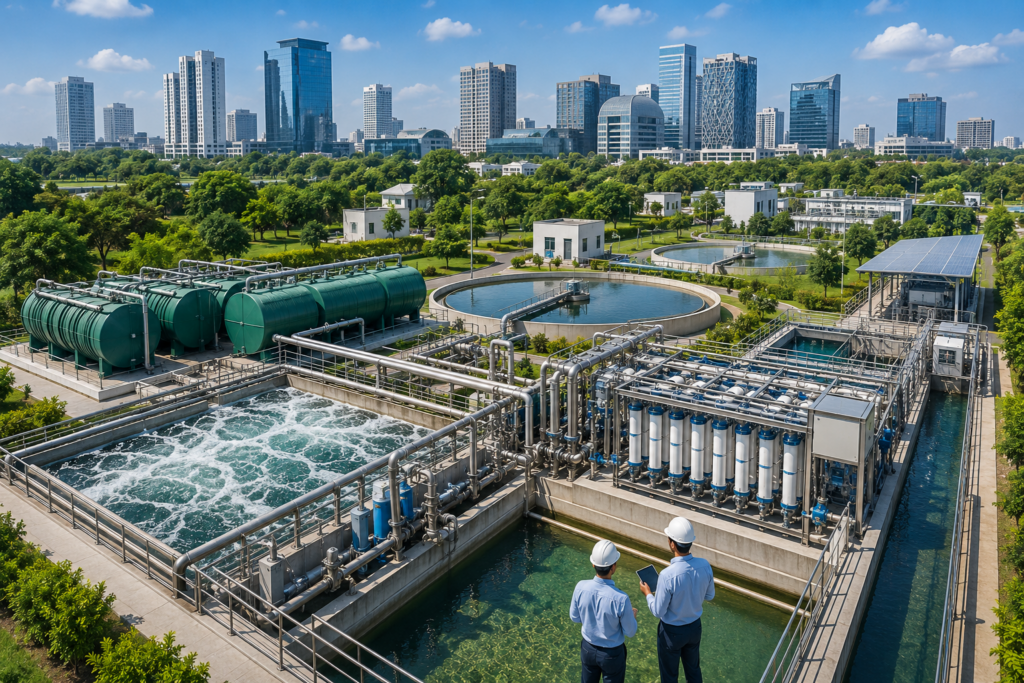
Modern Sewage Treatment Plants in Hyderabad: Latest Technologies, Process & Sustainable Water Management (2026 Guide)
Hyderabad is one of India’s fastest-growing metropolitan cities, witnessing rapid urban expansion, increasing industrialization, and a booming real estate sector. With thousands of residential apartments, IT parks, commercial complexes, hospitals, educational institutions, and manufacturing industries being developed every year, the demand for efficient wastewater management has become more critical than ever.
Water scarcity, environmental pollution, and stringent environmental regulations have mademodern sewage treatment plants in Hyderabad an essential part of sustainable infrastructure. Instead of allowing untreated sewage to pollute lakes, rivers, and groundwater, advanced sewage treatment technologies help convert wastewater into reusable water for landscaping, flushing, cooling towers, construction, and industrial applications.
In 2026, modernSewage Treatment Plants (STPs) are equipped with advanced technologies such asMBBR (Moving Bed Biofilm Reactor), SBR (Sequencing Batch Reactor), MBR (Membrane Bioreactor), IFAS (Integrated Fixed-film Activated Sludge), and IoT-enabled automation. These systems offer higher treatment efficiency, lower operating costs, compact designs, and compliance with the latest environmental standards.
Whether you are a builder, facility manager, industrial owner, municipal authority, or commercial property developer, investing in a reliable STP not only ensures regulatory compliance but also reduces freshwater consumption and supports sustainable water management.
This comprehensive guide explains how modern sewage treatment plants work, the latest technologies available, their benefits, applications, and how to choose the right STP solution for your project in Hyderabad.
What is a Modern Sewage Treatment Plant (STP)?
ASewage Treatment Plant (STP) is an engineered system designed to treat domestic and commercial wastewater by removing physical, biological, and chemical contaminants before safely discharging or reusing the treated water.
Unlike conventional sewage treatment systems, modern STPs use advanced biological treatment processes, automated controls, and energy-efficient equipment to achieve superior water quality with minimal maintenance.
The primary objective of an STP is to:
- Remove suspended solids
- Eliminate harmful bacteria and pathogens
- Reduce Biological Oxygen Demand (BOD)
- Lower Chemical Oxygen Demand (COD)
- Minimize unpleasant odors
- Produce reusable treated water
- Protect public health and the environment
Modern STPs are available in various capacities ranging from5 KLD to several thousand KLD, making them suitable for apartments, villas, hotels, hospitals, industries, educational institutions, shopping malls, airports, and municipal projects.
Why Hyderabad Needs Advanced Sewage Treatment Plants
Hyderabad has experienced tremendous growth over the last decade. The expansion of residential townships, IT corridors, pharmaceutical industries, and commercial infrastructure has significantly increased wastewater generation.
Without proper treatment, untreated sewage contaminates lakes, groundwater, and surrounding ecosystems, leading to serious environmental and public health concerns.
Rapid Urbanization
Thousands of new apartment complexes and gated communities are being developed across Hyderabad. Each residential project generates a significant amount of sewage every day, making modern STPs essential for wastewater management.
Industrial Growth
Hyderabad is home to pharmaceutical companies, food processing units, manufacturing industries, and industrial parks. Industrial wastewater requires efficient treatment before discharge or reuse, making advanced STPs a necessity.
Water Scarcity
With increasing demand for freshwater, treated wastewater has become a valuable resource. Reusing treated water for landscaping, flushing, cooling towers, and industrial processes helps conserve precious freshwater resources.
Environmental Regulations
Environmental authorities require residential and commercial developments above specified capacities to install sewage treatment systems that meet discharge norms. Modern STPs help organizations comply with these standards while minimizing environmental impact.
Why Sewage Treatment is Essential
Installing a modernsewage treatment plant offers several environmental, economic, and operational advantages.
1. Environmental Protection
Untreated sewage can pollute rivers, lakes, and groundwater, causing ecological damage and health risks. Proper treatment removes pollutants before water is discharged or reused.
Key Benefits
- Prevents water pollution
- Protects aquatic ecosystems
- Reduces groundwater contamination
- Minimizes foul odors
- Supports sustainable urban development
2. Water Conservation
Freshwater resources are becoming increasingly limited. Modern STPs allow treated wastewater to be safely reused for non-potable applications, reducing dependence on municipal water supplies.
Common reuse applications include:
- Garden irrigation
- Landscape maintenance
- Toilet flushing
- Cooling towers
- Construction activities
- Car washing
- Industrial cleaning
This significantly lowers water consumption and operating costs.
3. Regulatory Compliance
Government agencies and pollution control authorities have established strict discharge standards for wastewater treatment. Installing an advanced sewage treatment plant ensures compliance with environmental regulations, reducing the risk of penalties and operational disruptions.
4. Cost Savings
Although an STP requires an initial investment, it delivers substantial long-term savings through:
- Reduced freshwater procurement
- Lower sewage disposal costs
- Efficient energy consumption
- Minimal maintenance requirements
- Extended equipment life
Modern technologies such as MBBR and SBR are specifically designed to reduce operating expenses while maintaining high treatment efficiency.
5. Sustainable Water Management
Sustainable water management focuses on reducing water wastage, recycling wastewater, and protecting natural resources.
Modern sewage treatment plants contribute by:
- Recycling wastewater
- Conserving freshwater resources
- Supporting green building certifications
- Improving environmental sustainability
- Reducing carbon footprint
Organizations adopting advanced STPs demonstrate a commitment to responsible environmental stewardship while enhancing operational efficiency.
Key Features of Modern Sewage Treatment Plants
Today’s STPs are designed to provide maximum efficiency with minimal operational complexity. Key features include:
- Compact and space-saving design
- High-quality treated water suitable for reuse
- Low energy consumption
- Automated monitoring and control
- Reduced sludge generation
- Odor-free operation
- Easy installation and maintenance
- Remote monitoring through IoT
- Long service life
- Compliance with pollution control norms
These features make modern STPs an ideal solution for residential, commercial, industrial, and municipal applications.
How Does a Modern Sewage Treatment Plant Work?
Amodern sewage treatment plant (STP) follows a systematic process to remove physical, biological, and chemical impurities from wastewater. The treated water is then reused for non-potable purposes or safely discharged according to environmental standards.
Understanding the treatment process helps builders, industries, facility managers, and property owners appreciate how advanced STP technologies contribute to sustainable water management.
Step 1: Collection of Wastewater
The process begins with collecting wastewater from various sources within a residential, commercial, industrial, or institutional facility. This wastewater includes water from:
- Bathrooms
- Toilets
- Kitchens
- Wash basins
- Laundry rooms
- Floor cleaning
- Industrial processes (where applicable)
The sewage is transported through underground pipelines to the sewage treatment plant.
Step 2: Screening
The first stage removes large solid materials that could damage pumps and other equipment.
Common materials removed include:
- Plastic bags
- Paper
- Cloth pieces
- Food waste
- Leaves
- Bottles
- Stones
- Wooden pieces
Mechanical screens ensure smooth plant operation by preventing blockages.
Benefits
- Protects pumps
- Reduces maintenance
- Prevents pipeline clogging
- Improves treatment efficiency
Step 3: Grit Removal and Equalization Tank
Grit Removal
Heavy inorganic particles such as:
- Sand
- Gravel
- Small stones
are removed before biological treatment begins.
Equalization Tank
Wastewater flow varies throughout the day. The equalization tank stores incoming sewage and maintains a consistent flow to downstream treatment units.
This ensures:
- Stable biological activity
- Reduced shock loads
- Better treatment efficiency
- Lower operating costs
Air diffusers are commonly installed to keep wastewater mixed and prevent odor formation.
Step 4: Biological Treatment
This is the heart of everyadvanced sewage treatment plant.
Here, naturally occurring microorganisms break down dissolved organic pollutants.
The bacteria consume:
- Organic matter
- Oils
- Grease
- Suspended particles
This process significantly reduces:
- Biological Oxygen Demand (BOD)
- Chemical Oxygen Demand (COD)
- Total Suspended Solids (TSS)
Modern biological treatment technologies include:
- MBBR
- SBR
- MBR
- IFAS
- Activated Sludge Process
Step 5: Secondary Clarification
After biological treatment, water enters the clarifier.
Here:
- Activated sludge settles at the bottom.
- Clear water rises to the top.
- Settled sludge is partially recycled back into the biological tank.
- Excess sludge is sent for further treatment and safe disposal.
This stage produces significantly cleaner wastewater.
Step 6: Pressure Sand Filter (PSF)
The partially treated water passes through aPressure Sand Filter, which removes:
- Fine suspended solids
- Remaining particles
- Turbidity
Benefits include:
- Crystal-clear treated water
- Improved filtration
- Enhanced water quality
Step 7: Activated Carbon Filter (ACF)
The next stage removes:
- Color
- Odor
- Organic compounds
- Residual chemicals
Activated carbon enhances the aesthetic quality of treated water and prepares it for reuse.
Step 8: Disinfection
Even after filtration, microorganisms may still be present.
Modern STPs use one of the following disinfection methods:
UV Disinfection
- Chemical-free
- No harmful by-products
- Environment-friendly
Chlorination
- Effective against pathogens
- Economical
- Widely used
Ozonation
- High disinfection efficiency
- Removes odor
- Improves water quality
Step 9: Treated Water Storage
The treated water is stored in a dedicated tank before reuse.
Depending on the project, treated water can be used for:
- Gardening
- Landscaping
- Toilet flushing
- Cooling towers
- Construction
- Car washing
- Road cleaning
- Industrial processes
This reduces dependence on freshwater and promotes sustainable water reuse.
Modern Sewage Treatment Process Flow
Wastewater Collection
↓
Screening
↓
Grit Removal
↓
Equalization Tank
↓
Biological Treatment
↓
Secondary Clarifier
↓
Pressure Sand Filter
↓
Activated Carbon Filter
↓
UV / Chlorination / Ozonation
↓
Treated Water Tank
↓
Water Reuse
Latest Sewage Treatment Technologies in 2026
Selecting the right technology is crucial for achieving high treatment efficiency, low operating costs, and long-term reliability.
1. MBBR (Moving Bed Biofilm Reactor)
MBBR is one of the most popular sewage treatment technologies used in apartments, hotels, hospitals, commercial buildings, and industries.
How It Works
Special plastic media float inside the biological tank.
Beneficial bacteria grow on these media, breaking down pollutants more efficiently than conventional systems.
Advantages
- Compact design
- Low maintenance
- Energy efficient
- High BOD removal
- Easy operation
- Less sludge generation
- Suitable for varying sewage loads
Best Applications
- Apartments
- Hotels
- Educational institutions
- Commercial complexes
- Industries
2. SBR (Sequencing Batch Reactor)
SBR performs all treatment stages inside a single tank.
Treatment occurs in cycles:
- Fill
- Aeration
- Settling
- Decanting
- Idle
Advantages
- Excellent treated water quality
- Lower footprint
- Automated operation
- High nutrient removal
- Ideal for municipal projects
Best Applications
- Residential townships
- Municipal projects
- Hospitals
- IT Parks
3. MBR (Membrane Bioreactor)
MBR combines biological treatment with membrane filtration.
Instead of traditional clarifiers, membranes remove microscopic particles.
Advantages
- Exceptional water quality
- Nearly zero suspended solids
- Small footprint
- Superior pathogen removal
- Water suitable for high-end reuse
Best Applications
- Hospitals
- Pharmaceutical industries
- Commercial buildings
- Premium residential projects
4. IFAS (Integrated Fixed-Film Activated Sludge)
IFAS combines the benefits of activated sludge and biofilm technology.
Additional media inside the aeration tank increase bacterial growth.
Advantages
- Higher treatment capacity
- Easy retrofit
- Increased efficiency
- Better nitrogen removal
- Reduced energy consumption
5. Smart IoT-Based Sewage Treatment Plants
Modern STPs are increasingly integrated with IoT and automation systems.
Operators can monitor the plant remotely using computers or smartphones.
Features include:
- Real-time monitoring
- Automatic alarms
- Remote troubleshooting
- Energy optimization
- Predictive maintenance
- Cloud-based reporting
This reduces downtime and improves operational efficiency.
Comparison of Popular STP Technologies
Technology | Space Required | Treated Water Quality | Maintenance | Energy Consumption | Best For |
MBBR | Medium | High | Low | Low | Apartments & Commercial Buildings |
SBR | Medium | Very High | Medium | Medium | Municipal Projects |
MBR | Low | Excellent | Medium | Medium-High | Hospitals & Pharmaceuticals |
IFAS | Medium | High | Low | Low | Industrial Upgrades |
ASP | High | Moderate | High | High | Older Installations |
Choosing the Right STP Technology
When selecting a sewage treatment system, consider:
- Daily wastewater generation (KLD)
- Available installation space
- Required treated water quality
- Future expansion plans
- Power consumption
- Maintenance capability
- Budget
- Compliance requirements
- Water reuse objectives
Consulting an experiencedSTP manufacturer in Hyderabad helps ensure the selected technology aligns with your project’s operational and environmental goals.
Applications of Modern Sewage Treatment Plants
Modern sewage treatment plants are designed to meet the wastewater treatment needs of a wide range of sectors. With compact designs, automated controls, and high treatment efficiency, today’s STPs can be customized for projects ranging from small residential buildings to large industrial facilities.
Residential Apartments and Gated Communities
Apartment complexes generate significant quantities of wastewater every day. Installing a modern STP helps societies treat sewage on-site and reuse treated water for:
- Landscape irrigation
- Toilet flushing
- Common area cleaning
- Car washing
- Fire water storage (where applicable)
This reduces dependence on municipal water supplies while lowering monthly maintenance costs.
Villas and Residential Townships
Large villa communities benefit from decentralized sewage treatment systems that efficiently manage wastewater without burdening public sewer networks.
Benefits include:
- Continuous water recycling
- Sustainable community development
- Lower freshwater consumption
- Improved environmental compliance
Hotels and Resorts
Hotels consume large volumes of water every day for guest rooms, kitchens, laundries, and landscaping.
Modern STPs enable hotels to:
- Reuse treated water
- Reduce operational expenses
- Maintain green building certifications
- Improve sustainability initiatives
Hospitals and Healthcare Facilities
Hospitals require advanced wastewater treatment because of stricter hygiene standards.
Modern MBR and SBR systems provide:
- Superior pathogen removal
- High-quality treated water
- Reliable operation
- Compliance with environmental regulations
Educational Institutions
Schools, colleges, and universities can significantly reduce water consumption by recycling wastewater for:
- Gardening
- Toilet flushing
- Campus landscaping
- General cleaning
Industrial Facilities
Manufacturing plants generate varying types of wastewater depending on production processes.
Modern industrial STPs help industries:
- Meet discharge norms
- Recycle process water
- Reduce freshwater procurement costs
- Improve environmental sustainability
Commercial Buildings and IT Parks
Office complexes, shopping malls, and IT campuses use large quantities of water daily.
Installing an advanced sewage treatment plant allows facility managers to:
- Lower utility costs
- Improve ESG performance
- Achieve sustainable building certifications
- Ensure uninterrupted water availability for non-potable applications
Municipal Projects
Municipal corporations require high-capacity sewage treatment plants to treat wastewater generated by entire communities.
Benefits include:
- Reduced pollution
- Improved public health
- Protection of lakes and rivers
- Sustainable urban infrastructure
Benefits of Installing a Modern Sewage Treatment Plant
Investing in a modern sewage treatment plant offers long-term operational, financial, and environmental advantages.
1. Water Conservation
Recycling treated wastewater significantly reduces dependence on freshwater sources.
2. Lower Water Bills
Using recycled water for non-potable purposes helps reduce monthly water expenses.
3. Environmental Protection
Proper wastewater treatment prevents contamination of rivers, lakes, and groundwater.
4. Regulatory Compliance
Modern STPs comply with Pollution Control Board discharge standards and environmental regulations.
5. Odor-Free Operation
Advanced biological treatment and aeration systems minimize unpleasant odors.
6. Compact Installation
Modern technologies such as MBBR and MBR require less installation space compared to conventional systems.
7. Energy Efficiency
New-generation blowers, pumps, and automation systems reduce electricity consumption.
8. Automated Operation
IoT-enabled monitoring simplifies plant operation through remote access and real-time alerts.
9. Low Maintenance
Optimized biological processes reduce sludge generation and maintenance requirements.
10. Long Equipment Life
High-quality components and preventive maintenance increase the lifespan of the system.
Reuse Applications of Treated Water
One of the biggest advantages of installing an STP is water reuse.
Treated wastewater can safely be used for:
- Landscape irrigation
- Gardening
- Toilet flushing
- Cooling towers
- Construction activities
- Floor cleaning
- Car washing
- Industrial process water
- Dust suppression
- Road cleaning
Water reuse reduces freshwater demand and supports sustainable resource management.
Factors to Consider Before Choosing a Sewage Treatment Plant
Selecting the right STP requires careful planning.
Plant Capacity
Estimate daily wastewater generation in KLD to avoid under-sizing or over-sizing the system.
Available Space
Choose compact technologies if installation space is limited.
Treatment Technology
Select MBBR, SBR, MBR, or IFAS based on wastewater characteristics and treated water requirements.
Operating Cost
Consider electricity consumption, chemical usage, maintenance, and manpower.
Automation
IoT-enabled systems reduce manual intervention and improve operational efficiency.
Future Expansion
Plan for future increases in wastewater generation.
Compliance
Ensure the plant meets applicable Pollution Control Board standards.
Manufacturer Experience
Partner with an experienced sewage treatment plant manufacturer offering design, installation, commissioning, and after-sales support.
Common Mistakes to Avoid When Installing an STP
Many projects face operational issues due to poor planning. Avoid these common mistakes:
- Selecting the lowest-cost system without evaluating lifecycle costs.
- Installing an undersized plant that cannot handle peak sewage loads.
- Ignoring future expansion requirements.
- Choosing outdated treatment technologies.
- Neglecting preventive maintenance.
- Failing to train operators.
- Not monitoring treated water quality regularly.
- Delaying sludge removal.
- Choosing suppliers without proven project experience.
Proper planning and professional execution help ensure long-term, trouble-free operation.
Future of Sewage Treatment Plants in Hyderabad
As Hyderabad continues to grow, sewage treatment technology is evolving rapidly.
Emerging trends include:
- AI-powered plant optimization
- IoT-based remote monitoring
- Smart sensors for predictive maintenance
- Energy-efficient blowers and pumps
- Solar-powered STPs
- Zero Liquid Discharge (ZLD) integration
- Advanced nutrient removal technologies
- Water-positive building designs
- Circular water economy initiatives
These innovations will improve treatment efficiency while reducing operational costs and environmental impact.
Frequently Asked Questions (FAQs)
1. What is a sewage treatment plant?
A sewage treatment plant is a system that removes contaminants from wastewater, producing treated water suitable for safe discharge or reuse.
2. Which STP technology is best for apartments?
MBBR and SBR technologies are widely preferred for apartment complexes because they offer high treatment efficiency, compact design, and low maintenance.
3. Can treated water be reused?
Yes. Treated water can be reused for landscaping, toilet flushing, cooling towers, construction, and other non-potable applications.
4. How much space is required for an STP?
The space requirement depends on the plant capacity and technology. Compact technologies like MBR generally require the least space.
5. How often should an STP be maintained?
Routine inspections should be conducted weekly, with preventive maintenance performed according to the manufacturer’s recommendations.
6. Is installing an STP mandatory?
Many residential, commercial, and industrial developments are required to install sewage treatment systems to comply with local environmental regulations.
7. What is the lifespan of a modern sewage treatment plant?
With proper maintenance, a well-designed STP can operate efficiently for 20–25 years or more.
8. How do I choose the right STP manufacturer?
Look for a manufacturer with proven expertise, quality certifications, customized solutions, reliable after-sales service, and successful project experience.
Why Choose GreenSew for Sewage Treatment Plants in Hyderabad?
AtGreenSew, we specialize in designing and manufacturing advanced sewage treatment plants that deliver reliable performance, energy efficiency, and long-term sustainability. Our solutions are tailored for residential, commercial, industrial, and municipal projects, ensuring compliance with environmental standards while maximizing water reuse.
Why Partner with GreenSew?
- Advanced MBBR, SBR, MBR, and IFAS technologies
- Customized STP solutions from5 KLD to large-capacity systems
- Energy-efficient and low-maintenance designs
- High-quality components and durable construction
- Expert installation and commissioning
- Annual Maintenance Contract (AMC) support
- Automation and IoT-enabled monitoring
- Timely technical assistance and spare parts support
- Compliance with applicable pollution control guidelines
Whether you are planning a new project or upgrading an existing wastewater treatment system, GreenSew provides dependable, future-ready solutions designed to support sustainable water management.
Conclusion
With increasing urbanization, industrial growth, and water scarcity, investing in amodern sewage treatment plant in Hyderabad is no longer just a regulatory requirement—it is a strategic investment in sustainability. Advanced technologies such asMBBR, SBR, MBR, and IFAS enable efficient wastewater treatment, lower operating costs, and high-quality treated water suitable for reuse.
By selecting the right STP technology and partnering with an experienced manufacturer, organizations can conserve freshwater, reduce environmental impact, and ensure compliance with environmental regulations. As Hyderabad moves toward smarter and more sustainable infrastructure, modern sewage treatment plants will play a crucial role in securing the city’s water future.
If you’re looking for a reliable, efficient, and customized sewage treatment solution,GreenSew is ready to help you build a cleaner and more sustainable tomorrow.