
Sewage Treatment Plant Manufacturer Supplier in Hyderabad: Complete Guide to STP Solutions
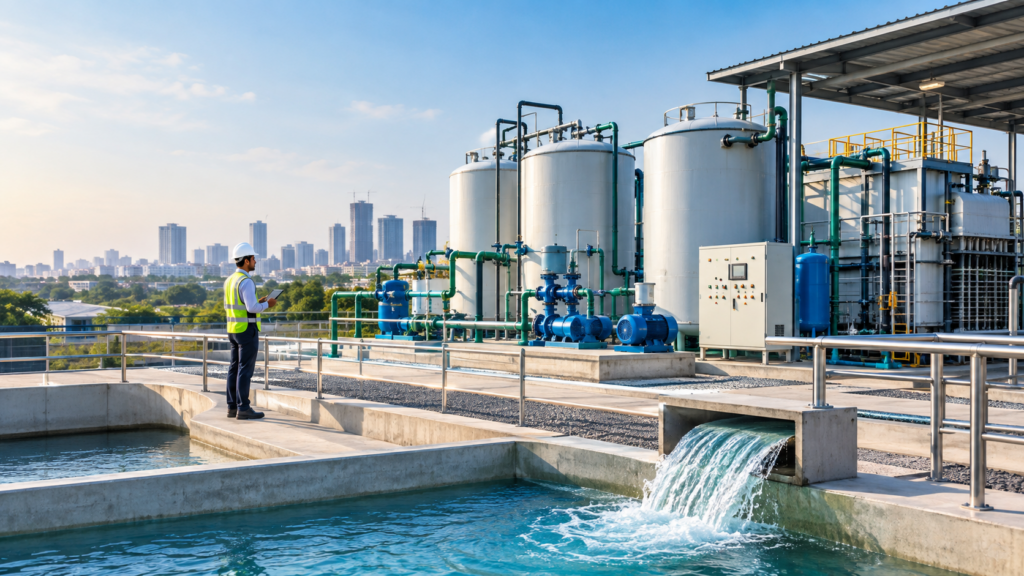
Hyderabad is experiencing rapid growth in residential communities, commercial buildings, hospitals, hotels, educational institutions, industries, and infrastructure projects. With this development comes a growing need for effective wastewater management.
ASewage Treatment Plant (STP) helps treat wastewater generated from buildings and other establishments so that the treated water can be safely reused for suitable non-potable applications or discharged according to applicable requirements.
Choosing the rightsewage treatment plant manufacturer in Hyderabad is important because STP performance depends on correct capacity calculation, appropriate treatment technology, hydraulic and biological design, equipment selection, installation, commissioning, and ongoing operation and maintenance.
GreenSew provides engineeredSTP solutions in Hyderabad for residential, commercial, institutional, industrial, and municipal applications, with options including prefabricated and technology-specific sewage treatment systems.
What Is a Sewage Treatment Plant (STP)?
ASewage Treatment Plant, commonly called an STP, is a treatment system designed to remove physical, organic, biological, and other contaminants from sewage generated by residential and commercial activities.
Domestic sewage generally contains suspended solids, organic matter, nutrients, microorganisms, oils, and other contaminants. An STP uses a combination of physical, biological, and sometimes advanced treatment processes to reduce these pollutants.
A typical sewage treatment process may include:
- Screening
- Grit and solids removal
- Equalisation
- Biological treatment
- Secondary clarification or membrane separation
- Filtration
- Disinfection
- Treated-water storage
- Sludge management
The exact process depends on theSTP technology, capacity, inlet sewage characteristics, treated-water requirements, available space, and intended reuse application.
What is an STP?
An STP, or Sewage Treatment Plant, is a system that treats wastewater generated from residential, commercial, institutional, and other establishments. It uses physical, biological, and sometimes advanced treatment processes to reduce pollutants and produce treated water suitable for approved reuse or discharge applications.
Why Are Sewage Treatment Plants Important in Hyderabad?
Hyderabad’s expanding urban development has increased the importance of efficient wastewater treatment and water reuse.
An appropriately designedsewage treatment plant in Hyderabad can help projects:
- Treat wastewater generated on-site
- Reduce freshwater requirements through reuse
- Support responsible wastewater management
- Reduce environmental pollution
- Improve water conservation
- Support applicable regulatory requirements
- Provide treated water for suitable non-potable applications
For apartment complexes, gated communities, hotels, hospitals, commercial buildings, and institutions, an STP can become an important part of the overall water-management infrastructure.
The objective should not simply be to install an STP. The system should beproperly designed, installed, commissioned, operated, and maintained so that it can perform consistently under actual site conditions.
How Does a Sewage Treatment Plant Work?
The working process of an STP varies depending on the selected technology. However, a typical sewage treatment system follows several stages.
1. Screening
Incoming sewage passes through screens that remove larger floating materials such as plastics, rags, paper, and other debris.
2. Primary Treatment
Heavy suspended solids can be separated through appropriate physical processes. Depending on the system design, this stage may include settling or other preliminary treatment.
3. Biological Treatment
Microorganisms break down biodegradable organic matter present in sewage.
Technologies such asMBBR, SBR, and MBR use different approaches to achieve biological treatment.
4. Secondary Separation
The treated biological mixture needs to be separated from the treated water.
Depending on the technology, this may be achieved using a settling process or membrane separation.
5. Filtration and Polishing
Additional filtration may be used when a higher-quality treated-water output is required for specific reuse applications.
6. Disinfection
Disinfection may be used to reduce microorganisms before treated water is reused or discharged, depending on the application and applicable requirements.
7. Treated Water Reuse
After appropriate treatment, treated sewage water can potentially be used for suitable non-potable purposes such as landscaping, toilet flushing, construction, or other approved applications.
How does an STP treat sewage water?
An STP treats sewage through a sequence of processes such as screening, biological treatment, solids separation, filtration, and disinfection. The exact treatment process depends on the STP technology and required treated-water quality.
Types of Sewage Treatment Plants Available in Hyderabad
There is no single STP technology suitable for every project. The appropriate system depends on capacity, site conditions, treatment requirements, space, operating requirements, budget, and reuse objectives.
MBBR Sewage Treatment Plant
MBBR, or Moving Bed Biofilm Reactor, uses specially designed carrier media inside an aerated biological reactor.
Microorganisms grow on the carrier media and help break down biodegradable organic matter.
MBBR STPs can be considered for:
- Residential apartments
- Commercial buildings
- Hotels
- Institutions
- Hospitals
- Other domestic sewage applications
The final configuration should be selected based on project-specific design requirements.
SBR Sewage Treatment Plant
SBR, or Sequential Batch Reactor, combines biological treatment and settling in a controlled batch process.
An SBR typically operates through phases such as:
- Fill
- React
- Settle
- Decant
- Idle
SBR systems can be suitable for applications where process automation and controlled biological treatment are required.
MBR Sewage Treatment Plant
MBR, or Membrane Bioreactor, combines biological treatment with membrane separation.
Membranes can provide high-quality solids separation and produce treated water suitable for applications where higher-quality reuse is required, subject to the complete treatment design.
MBR systems can be considered where:
- Space is limited
- High treated-water quality is required
- Water reuse is a major objective
- Compact treatment systems are preferred
Prefabricated Sewage Treatment Plant
Aprefabricated STP is manufactured or assembled substantially in a controlled manufacturing environment before being transported to the project site.
Depending on the design, prefabricated systems can offer:
- Faster installation
- Factory-controlled manufacturing
- Compact configurations
- Reduced site construction requirements
- Consistent fabrication quality
GreenSew’s easySTP is a prefabricated sewage treatment solution designed for applications where compactness, simplified installation, and operational practicality are important considerations.
Municipal Sewage Treatment Plants
Large-scale municipal projects require significantly different design considerations from building-level STPs.
Municipal systems can incorporate:
- Large treatment capacities
- Automated process control
- PLC systems
- SCADA
- Online monitoring
- Sludge-management systems
- Advanced treatment processes
The technology and configuration should be selected according to project requirements and applicable specifications.
How to Choose the Right STP Technology?
Selecting an STP should involve more than comparing equipment prices.
Important factors include:
1. Sewage Flow
Determine the average and peak sewage generation.
2. STP Capacity
Capacity is generally expressed inKLD, meaning kilolitres per day.
3. Available Space
Compact technologies can be useful where land availability is limited.
4. Treated-Water Requirement
The required treated-water quality depends on the intended reuse or discharge application.
5. Capital Cost
Compare the complete project cost rather than only the treatment equipment.
6. Operating Cost
Consider electricity, chemicals where applicable, manpower, consumables, maintenance, and sludge management.
7. Operator Requirements
Some systems require more operational attention than others.
8. Maintenance
Consider accessibility of pumps, blowers, membranes, filters, controls, and other components.
9. Future Requirements
The design should consider potential changes in occupancy, water demand, or reuse requirements.
Which STP technology is best?
The appropriate STP technology depends on sewage quantity, site conditions, available space, required treated-water quality, power consumption, operating requirements, budget, and reuse objectives. A project-specific engineering assessment should be completed before selecting MBBR, SBR, MBR, prefabricated, or another treatment configuration.
How to Calculate STP Capacity in KLD?
One of the most important steps in selecting asewage treatment plant is determining the required capacity.
A preliminary calculation can start with:
Number of users × estimated water consumption per person per day × sewage generation factor = estimated sewage generation
For example, if a residential project has 200 occupants and the design water consumption is 120 litres per person per day:
200 × 120 = 24,000 litres/day
That equals:
24 KLD water demand
If an 80% sewage-generation factor is used for preliminary estimation:
24 × 80% = 19.2 KLD sewage
The final STP capacity should not be selected from a simple calculation alone. Peak flow, actual water usage, project type, infiltration, future occupancy, and engineering design requirements should also be considered.
AEO Answer: What does KLD mean in an STP?
KLD meansKilolitres per Day. One kilolitre equals 1,000 litres. STP capacity is commonly expressed in KLD to indicate the approximate volume of sewage the treatment plant is designed to handle per day.
STP Solutions for Different Projects in Hyderabad
Asewage treatment plant supplier in Hyderabad may provide different configurations depending on the type of project.
Residential Apartments
Apartment projects commonly require STPs based on population, water consumption, sewage generation, available space, and reuse requirements.
Gated Communities and Villas
Large communities can use centralised sewage treatment systems to treat wastewater generated by multiple residences.
Hotels and Resorts
Hotels can have varying wastewater generation depending on occupancy, restaurants, laundry, kitchens, and other facilities.
Hospitals
Hospital wastewater requires careful assessment because its characteristics can differ from ordinary domestic sewage.
Schools and Institutions
Educational institutions can require STPs based on student population, staff, hostels, kitchens, and other facilities.
Commercial Buildings
Offices and commercial developments can require compact systems designed around daily occupancy and water usage.
Industrial Applications
Industrial wastewater should not automatically be treated as domestic sewage. Industrial effluent requires separate characterisation and an appropriate treatment design.
Municipal Projects
Municipal sewage treatment projects generally require larger capacities, advanced process control, monitoring, and robust infrastructure.
Prefabricated STP vs Civil STP
Project owners often compare prefabricated and civil sewage treatment plants.
Factor | Prefabricated STP | Civil STP |
Manufacturing | Factory-based | Primarily site-based |
Installation | Can be faster | Generally longer |
Construction | Reduced site construction | More civil construction |
Quality control | Factory-controlled fabrication | Dependent on site execution |
Space | Compact configurations available | Depends on civil layout |
Customisation | Technology/design dependent | Highly customisable |
Project timeline | Potentially shorter | Generally longer |
The right choice depends on the site, project schedule, capacity, technology, civil infrastructure, and total lifecycle requirements.
Key Benefits of a Modern Sewage Treatment Plant
A properly designed STP can provide several benefits:
Water Reuse
Treated wastewater can be reused for suitable non-potable applications, reducing freshwater demand.
Environmental Protection
Treatment reduces the pollution load associated with untreated sewage.
Space Optimisation
Modern technologies can provide compact treatment configurations.
Automation
PLC-based controls and monitoring can simplify process management.
Operational Efficiency
Technology selection and proper design can help manage power, manpower, and maintenance requirements.
Long-Term Water Management
An STP can become an important component of an integrated water-reuse strategy.
Where Can Treated STP Water Be Reused?
Depending on treated-water quality and applicable requirements, treated sewage water may be considered for non-potable uses such as:
- Landscape irrigation
- Gardening
- Toilet flushing
- Construction activities
- Cooling applications
- Road cleaning
- Other approved non-potable applications
The treatment process should be designed according to the intended reuse quality rather than assuming that every STP produces water suitable for every application.
Can STP-treated water be reused?
Yes. Appropriately treated sewage water can be reused for certain non-potable applications, such as landscaping, toilet flushing, and other suitable uses, provided the treated water meets the quality requirements applicable to the intended use.
STP Installation Process in Hyderabad
A professionalSTP manufacturer in Hyderabad should follow a structured project process.
Step 1: Site Assessment
Understand available space, sewage collection, inlet levels, electrical requirements, access, and installation conditions.
Step 2: Capacity Calculation
Estimate average and peak sewage flow.
Step 3: Technology Selection
Select an appropriate treatment process based on project requirements.
Step 4: Engineering Design
Develop process flow, equipment sizing, hydraulic design, piping, electrical, and control requirements.
Step 5: Technical Proposal
The proposal should clearly identify:
- STP capacity
- Technology
- Treatment process
- Equipment
- Scope of supply
- Installation scope
- Electrical requirements
- Warranty
- AMC options
Step 6: Manufacturing
Equipment or prefabricated systems are manufactured according to the approved design.
Step 7: Transportation and Installation
The STP is transported to the project site and installed.
Step 8: Testing and Commissioning
The system is tested and commissioned before regular operation.
Step 9: Training
Operators or project personnel are trained on routine operation and maintenance.
Step 10: AMC and Service
Regular preventive maintenance can help maintain reliable long-term operation.
What Should You Check Before Buying an STP?
Before selecting anSTP supplier in Hyderabad, ask for clear technical and commercial information.
STP Buyer Checklist
- Company experience
- Previous STP projects
- Proposed technology
- Design capacity
- Inlet and outlet parameters
- Equipment specifications
- Power consumption
- Space requirements
- Installation scope
- Civil-work requirements
- Automation details
- Warranty
- AMC
- Spare-parts availability
- Commissioning scope
- Operator training
- Testing and documentation
Do not compare suppliers only on the lowest quoted price. Compare the complete scope, technical specifications, expected operating costs, service support, and lifecycle requirements.
How Much Does an STP Cost in Hyderabad?
There is no single fixed price for a sewage treatment plant.
The cost of anSTP in Hyderabad depends on several factors:
- STP capacity in KLD
- Treatment technology
- Prefabricated or civil construction
- Equipment selection
- Automation level
- Filtration requirements
- Disinfection system
- Civil works
- Electrical works
- Piping
- Installation
- Transportation
- Treated-water reuse requirements
- AMC and service requirements
A 25 KLD STP and a 500 KLD STP, for example, will have very different engineering and equipment requirements.
For this reason, project owners should request aproject-specific STP quotation rather than relying on a generic online price.
AEO Answer: What is the cost of an STP in Hyderabad?
The cost of an STP in Hyderabad depends on capacity, technology, equipment, civil and electrical work, automation, installation, and treated-water requirements. A project-specific technical assessment is required to provide a reliable quotation.
STP Operation and Maintenance
Installing an STP is only the beginning. Regular operation and maintenance are important for long-term performance.
Typical maintenance activities may include:
- Checking pumps
- Checking blowers
- Monitoring process parameters
- Cleaning screens
- Monitoring sludge
- Checking filters
- Inspecting electrical panels
- Monitoring water quality
- Preventive maintenance
- Replacing worn components
- Periodic laboratory testing
The required manpower and maintenance frequency depend on the technology, capacity, automation level, operating conditions, and system design.
Common STP Problems
Poorly designed or poorly maintained STPs can experience issues such as:
Bad Odour
May result from inadequate aeration, excessive sludge accumulation, septic conditions, or improper operation.
Poor Treated-Water Quality
Can result from hydraulic overloading, biological-process problems, insufficient maintenance, or inappropriate system design.
High Power Consumption
May result from inefficient equipment, improper aeration control, operating conditions, or equipment selection.
Excessive Sludge
Can occur due to biological-process conditions and inadequate sludge management.
Pump or Blower Failures
Can result from wear, improper maintenance, electrical issues, or unsuitable equipment.
Foaming
Can have several possible causes and requires process-specific investigation.
How to Avoid STP Performance Problems
A reliable STP starts with proper engineering.
Project owners should focus on:
- Accurate sewage-flow estimation
- Correct STP capacity selection
- Appropriate technology
- Proper hydraulic design
- Correct biological-process design
- Quality equipment
- Professional installation
- Proper commissioning
- Operator training
- Preventive maintenance
- Periodic water-quality monitoring
An STP should be designed for theactual project conditions, not simply copied from another installation.
Why Choose GreenSew for STP Solutions in Hyderabad?
GreenSew provides engineered wastewater-treatment solutions for different project requirements.
As asewage treatment plant manufacturer and supplier in Hyderabad, GreenSew focuses on combining engineering, manufacturing, installation, commissioning, and service support.
GreenSew solutions can include:
- Prefabricated STPs
- easySTP
- MBBR STPs
- SBR STPs
- MBR STPs
- Municipal sewage treatment solutions
- Sewage recycling systems
- UF and MBR-based reuse systems
- STP AMC and maintenance
The appropriate solution is selected according to project capacity, site conditions, treatment requirements, space availability, operating requirements, and reuse objectives.
GreenSew’s approach is centred on practical wastewater engineering designed for real project conditions.
GreenSew STP Solutions
easySTP
A compact prefabricated sewage treatment solution designed for projects that require practical installation and simplified operation.
MBBR STP
A biological treatment solution using moving biofilm carrier media.
SBR STP
A batch-based biological treatment process with controlled treatment cycles.
MBR STP
A membrane-based biological treatment system suitable for applications requiring high-quality treated water and compact treatment.
Municipal STP
Large-scale sewage treatment solutions can incorporate automation, PLC/SCADA, online monitoring, and other project-specific systems.
How to Select a Sewage Treatment Plant Manufacturer in Hyderabad
When searching for asewage treatment plant manufacturer in Hyderabad, evaluate the company based on the complete project lifecycle.
Consider:
Engineering → Manufacturing → Installation → Commissioning → Operation → Maintenance
A supplier that understands only equipment supply may not provide the same project support as an organisation capable of handling the complete STP solution.
Ask potential suppliers about their:
- Engineering capability
- Manufacturing facilities
- Technology options
- Installation team
- Commissioning process
- Service network
- AMC support
- Previous installations
- Technical documentation
- Spare-parts support
Frequently Asked Questions About Sewage Treatment Plants in Hyderabad
What is a sewage treatment plant?
A sewage treatment plant is a system designed to treat wastewater and reduce contaminants through physical, biological, and sometimes advanced treatment processes.
Why is an STP required?
An STP helps manage wastewater generated by buildings and other establishments, enabling appropriate treatment, reuse, or discharge according to applicable requirements.
How does an STP work?
An STP generally uses screening, biological treatment, solids separation, filtration, and disinfection. The exact process depends on the selected technology.
What is KLD in an STP?
KLD means Kilolitres per Day. It is a common unit used to express the treatment capacity of an STP.
Which STP technology is suitable for apartments?
MBBR, SBR, MBR, and prefabricated STP configurations can be considered for apartment projects. The appropriate technology depends on population, sewage generation, space, treated-water requirements, operating conditions, and budget.
What is the difference between MBBR and SBR?
MBBR uses moving biofilm carrier media for biological treatment, while SBR uses a batch treatment process involving controlled phases such as fill, react, settle, and decant.
What is an MBR sewage treatment plant?
An MBR combines biological treatment with membrane separation. It can produce high-quality treated water and can provide a compact treatment configuration.
How much space does an STP require?
Space requirements depend on capacity, technology, equipment arrangement, sludge handling, filtration, access requirements, and site-specific design.
How much does an STP cost in Hyderabad?
STP cost depends on capacity, technology, equipment, civil works, electrical works, automation, installation, and treated-water requirements. A project-specific quotation is required for accurate pricing.
Can treated STP water be reused?
Yes. Properly treated sewage water can be reused for suitable non-potable applications when the required water-quality criteria are met.
How often does an STP require maintenance?
Maintenance frequency depends on the STP technology, equipment, operating conditions, automation, and manufacturer recommendations. Regular preventive maintenance is important for reliable operation.
How do I choose an STP manufacturer?
Compare manufacturers based on engineering capability, technology, manufacturing quality, installation, commissioning, warranty, AMC, service support, documentation, and previous project experience—not only initial price.
Conclusion
Selecting the rightsewage treatment plant manufacturer and supplier in Hyderabad is an important decision for any residential, commercial, institutional, industrial, or infrastructure project.
The right STP should be selected based on sewage quantity, treatment requirements, available space, technology, operating requirements, treated-water reuse objectives, lifecycle cost, and long-term service support.
Whether you are looking for aprefabricated STP, MBBR STP, SBR STP, MBR STP, or municipal sewage treatment solution, GreenSew can help evaluate the project requirements and identify an appropriate engineering solution.