
What is SBR Technology? How Does the SBR System Work?
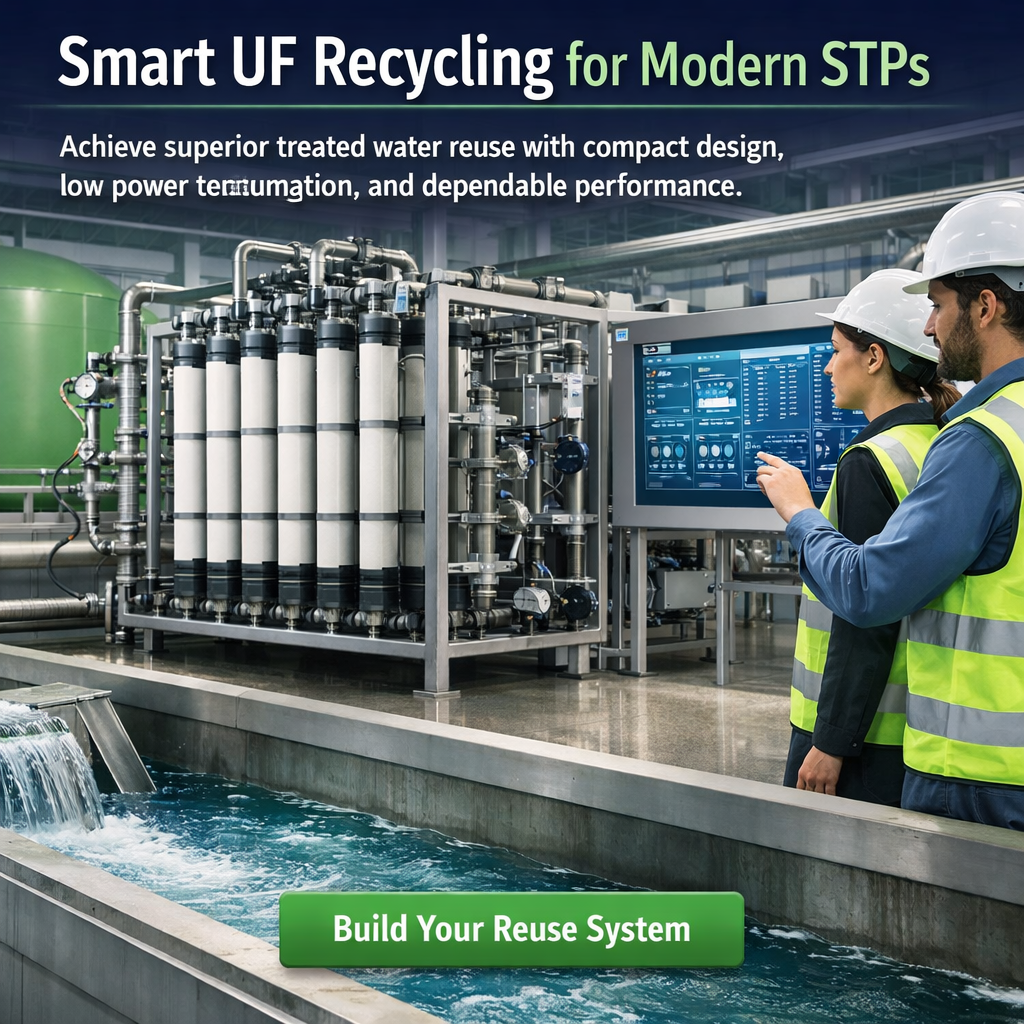
In the modern wastewater treatment industry, SBR (Sequencing Batch Reactor) technology has emerged as one of the most efficient and flexible biological treatment methods. It is widely used in sewage treatment plants (STPs) for residential, commercial, and municipal applications due to its compact design, high treatment efficiency, and operational simplicity.
What is SBR Technology?
SBR technology is a type of activated sludge process where wastewater treatment occurs in a single tank through a sequence of timed steps. Unlike conventional continuous-flow systems, SBR operates in batch mode, meaning all treatment stages—equalization, aeration, settling, and decanting—occur in the same reactor but at different times.
This time-based operation eliminates the need for multiple tanks such as secondary clarifiers, making SBR systems more space-efficient and easier to manage. The process is particularly effective for removing BOD, COD, TSS, and nutrients like nitrogen and phosphorus from sewage.
How Does the SBR System Work?
An SBR system works through a repeating cycle of five main stages:
1. Fill Phase
Raw sewage enters the reactor tank. During this phase, the basin may be mixed without aeration to start biological activity and equalize the incoming load.
2. React (Aeration) Phase
Air is supplied through diffusers to promote microbial growth. Beneficial bacteria consume organic pollutants, breaking down contaminants in the wastewater. This is the core treatment stage where most BOD and COD removal occurs.
3. Settle Phase
Aeration stops, allowing the activated sludge to settle at the bottom of the tank. Clear treated water forms at the top while solids separate naturally.
4. Decant Phase
The clarified treated water is carefully removed from the top using a decanter mechanism without disturbing the settled sludge.
5. Idle Phase
The system prepares for the next cycle. Excess sludge may be wasted during this stage to maintain optimal biomass levels.
Key Advantages of SBR Technology
SBR systems are gaining popularity because they offer several operational and economic benefits. They require less footprint, making them ideal for space-constrained sites. The process delivers high-quality treated water suitable for reuse applications such as flushing, gardening, and cooling. SBR plants also provide flexibility to handle flow variations, which is especially useful in residential and institutional projects.
Additionally, the automation-friendly design reduces operator dependency and ensures consistent performance when properly maintained.
Conclusion
SBR technology is a smart, compact, and efficient solution for modern sewage treatment needs. By combining multiple treatment stages in a single reactor and operating through a timed cycle, SBR systems simplify plant design while delivering reliable treatment performance. For projects seeking high efficiency with optimized space and operational control, SBR remains a proven and future-ready wastewater treatment technology.